
Thursday, December 05, 2019


Wednesday, December 04, 2019
PISA 2018

Malaysia seems to be a laggard. Not surprising since the ministry is busy and occupied with issues of Khat and black shoes akin.
Saturday, November 30, 2019
Trying to fit a Paranormal Distribution. LOL.

Guess what's the function to fit the above Paranormal Distribution. LOL.

Wednesday, November 27, 2019
Adsense. Meh.

After reactivated this blog site, I moved on to submit site registration to AdSense hoping to serve Ads to fund a bit on the site expenditures. However, to my amazement, even though the submission process was relatively friction-less, my submission kept rejected by the AdSense system and only received an email with some generic pointer to the ghostly issues I supposed to fix.
I guess I have to either randomly changing something or moving on to other advertisers.
Thursday, November 14, 2019

Wednesday, November 13, 2019

Monday, November 11, 2019
Data Science, The Fourth Industrial Revolution And The Future Of Entrepreneurship

As an accountant and entrepreneur, I’m always trying to keep track of the newest developments in my professional fields. I believe that it’s important to follow present-day trends in order to gain insight into the potential future of these industries. I’ve written previously about some of these major developments, including blockchain technology, the internet of things and the Tax Cuts and Jobs Act.
However, the next big thing I’ve been following has to do with the combination of two large trends. Currently, I believe that the intersection of two recent developments in business and technology will have a monumental impact on my career: the fledgling field of data science, and the Fourth Industrial Revolution.
The Intersection Of Data Science And The Fourth Industrial Revolution
For the sake of clarification, here’s a brief primer on both of these concepts.
As a relatively new field, data science seeks to improve the way we interact with the massive amount of information provided to us in the modern era. In the age of the Internet, smartphones and social media, the sheer volume of data available to businesses, politicians and researchers can be difficult to parse. Through a combination of previously existing methodologies such as statistics, programming and mathematics, this new scientific field has grown into a highly lucrative career path.
The term “Fourth Industrial Revolution” was coined by World Economic Forum (WEF) chairman Klaus Schwab in 2015. In an article he wrote for the WEF, he describes it as an exponential growth of several key technological fields that were previously born out of the digital-based Third Industrial Revolution. Some specific fields he cites as examples of this forthcoming revolution include artificial intelligence, quantum computing, the internet of things and 3-D printing, among others. Subsequent descriptions of the Fourth Industrial Revolution have gone on to include technological concepts, such as smart materials and blockchain technology.
These two emerging concepts interact in a symbiotic manner. What I mean by that is that the Fourth Industrial Revolution requires the proper implementation of data science to exist. At the same time, the effects of technologies and business ventures created through the Fourth Industrial Revolution provide new avenues of data, which can then be harnessed through the power of data science.
From Theory To Practice
Everything mentioned above makes sense in theory, but what does any of this actually mean in practice? As with any newly emerging trends and technologies, it can be difficult to cut through the buzzwords to understand what any of these concepts are actually capable of. Here are some real-world examples to help illustrate these terms in greater detail.
One of the major decisions Netflix made that helped it reach its current level of success, both as a popular streaming service and content creator, was the production and release of its first original show, House of Cards. A 2013 New York Times article (registration required) goes into more detail about the data-based research that went into this program. Essentially, the large quantities of data gathered by the streaming platform allowed Netflix to use data science and identify key factors (visual elements, subject matter, actors) that would result in a popular TV show. Consequently, incorporating these elements into their original programming essentially guaranteed its success, both among audiences and at awards shows.
When discussing the Fourth Industrial Revolution, there’s a particular product that illustrates its current and future potential in the same way as the steam engine encapsulated the potential of the first Industrial Revolution. That product is Amazon’s Alexa — an AI virtual assistant powered by machine learning and able to connect with the Internet of Things. As a 2018 Amazon Developer blog post puts it, Alexa “is about removing friction in our customers’ interactions with the physical and digital world,” which can be interpreted as the central thesis of the current data-driven revolution. The way it — and Amazon by extension — accomplishes this monumental task would simply not be possible without the previous three industrial revolutions, making it a true product of its time.
The Future Of Entrepreneurship
With an understanding of what these lofty concepts are and how they’re currently being implemented by businesses, what can we discern about the future? If you’re an entrepreneur looking to benefit from this unique intersection of science and technology, here are some of my personal suggestions based on extensive research and past experience.
First, it’s important to learn as much about these fields as you can. If you don’t have someone on your team who’s knowledgeable in data science, you should fix that. Many colleges now offer courses and entire major programs around this fledgling field of study, making it easier to recruit people with a solid academic foundation in this area. Alternatively, you can sponsor current employees to pursue data science certifications through online education providers like edX.
Additionally, look for professionals who have experience with projects or businesses relating to the Fourth Industrial Revolution. This is the strategy that Google and Amazon have been taking with their respective acquisitions of IoT companies Nest and Ring. However, you also need to be careful of existing regulations when planning your business of the future. For an excellent example of what can go wrong when attempting to disrupt current industries and laws, look into the story of Defense Distributed and its Ghost Gunner 3-D printer.
Although it’s never a bad idea to look at the actions taken by these companies for inspiration, it’s also important to attempt to innovate and take bold risks by pursuing new partnerships and business ventures. There’s a popular quote from mathematician and entrepreneur Clive Humby that sums up the current state of business: “Data is the new oil.” Ultimately, I believe that the path to success in the current age is to take this statement to heart and approach the intersection of these two big ideas with the aspirations of a modern oil baron. I believe that the company that successfully does this will become the next Google or Amazon.
Behind the Scenes as Alibaba Revs Up For 11.11 2019
After five years away from its Hangzhou headquarters, Alibaba is bringing much of its 11.11 Global Shopping Festival festivities back to Xixi campus.
Advertisers emerge as buyers for ad tech

With venture capital money for ad tech and marketing technology businesses scarce and strategic buyers also hard to find, marketers are emerging as potential acquirers.
The slump in optimism around ad tech and martech businesses hasn’t been enough to deter a growing number of advertisers. So far this year, several high-profile advertisers have swooped for companies that sat on the periphery of the ad tech and mar tech sectors. McDonald’s bought personalization platform in March, Walmart snapped up ad tech startup Polymorph Labs to deliver more relevant ads to online shoppers in April, Nike bet on predictive analytics company Celect in August; travel startup OYO Hotels and Homes-bought Danamica, a Copenhagen-based startup that specializes in dynamic pricing through machine learning in September; and the same month MasterCard cut a deal for customer data platform SessionM.
As different as the acquired businesses are to one another, none of them can be described as a core part of an ad tech or martech stack — i.e., a demand-side platform, an ad server, a content marketing platform or search engine optimization tools. None of those types of businesses are easy to manage. Agencies and publishers have tried to make those deals work in the past and struggled to varying degrees. When mobile phone operator Three kicked off a search to acquire a DSP in the first quarter of the year, for example, the procurement process quickly ground to a halt, said one consultant with knowledge of the plan on condition of anonymity. With the latest wave of acquisitions, however, advertisers aren’t trying to shoehorn sprawling ad businesses that weren’t developed with them in mind. Instead, they’re eyeing smaller but arguably more strategic vendors that can turbocharge specific objectives.
“We’re not talking about premium ad tech and martech businesses that are attracting the interest from advertisers,” said Tristan Rice, partner at M&A advisory SI Partners.
The motivations for these deals aren’t too dissimilar to why advertisers have bought agencies, built their own technology and hired internal specialists over the years. Data-driven personalization is a common thread that draws together many of the deals that have been completed by brands. Owning those types of companies directly could save time and money while also provide greater control over results.
Take Walmart’s acquisition of Polymorph Labs and McDonald’s deal for Dynamic Yield, for example. Walmart is able to serve highly targeted ads, and McDonald’s can offer diners individually tailored menus. The idea of using data and technology to enable a better customer experience and ultimately drive higher conversion rates is a key factor in many of these deals.
Growing interest in ad tech and martech from advertisers is viewed as something of a lifeboat for entrepreneurs worried they weren’t going to see a payday for their businesses, which provide solutions to specific problems rather than the full-scale propositions of larger players in the ad tech and martech space. For a start, the companies that have caught the eye of advertisers are valued on the tech solutions needed rather than the strength of their financial models. The likes of Dynamic Yield are smaller vendors that haven’t been able to grow at the same rate as larger, more traditional ad tech and martech players have. The valuations between the two types of ad tech and martech businesses are worlds apart. McDonald’s bought Dynamic Yield for $300 million (£234 million), whereas AT&T acquired ad tech vendor AppNexus for $1.6 billion (£1.3 billion, for example).
“Brands and retailers at risk of being disintermediated by Google, Amazon, Facebook and Apple are actively fighting back,” said Julie Langley, partner at M&A advisory firm Results International. “We will undoubtedly see a lot of interest in tech businesses that can help physical retailers bridge the gap, and turn physical stores into a positive as part of their broader digital transformation.”
Wednesday, October 30, 2019

Saturday, June 29, 2013
Passed 70-341 Core Solutions of Microsoft Exchange Server 2013
 This examination was comparatively difficult because of the scarcity of targeted certification study materials and administrators coming from any of the prior versions of Exchange properly got shocked by architectural changes made in 2013 and not many have the opportunity to really hands-on that long to prepare for this examination. Well, since my learning is to equip one-self by the knowledge needed to withstand technological environment risks and integration hassles, I guess it should be even harder for me, right? LOL
Anyway, behold while I list down my study materials.
* Virtual Lab
* Mastering Microsoft Exchange Server 2010
* Exchange Server 2013 Unleashed
* TechNet
* Articles
I need to admit that some of the books are not for the light-hearted whom sole purpose is just to get the certification or simply looking for introductory materials but having read through any of the books will set you the right expectation about the product and administration role of managing the product infrastructure.
Oh well, passing it with 899 is not so bad for me I think. :)
And by the way, Prometric website nowadays seems unreliable. Page error popped up after I made payment and no email notification on anything even though the support replied and said they did, Grrr. And yes, I did check my spam folder. LOL
More exams to come :)
Saturday, May 25, 2013
Technology is Inevitable to Modern Life Style
Just when I thought my desire to watch movies at cinema was totally diminished after a disappointing experience watching Ironman-3, the release of Star Trek: Into Darkness in IMAX 3D really reignites the economics of utility maximization in my decision making process in determining whether to watch in "Cinema" or "Blu-ray" or "HD format download".
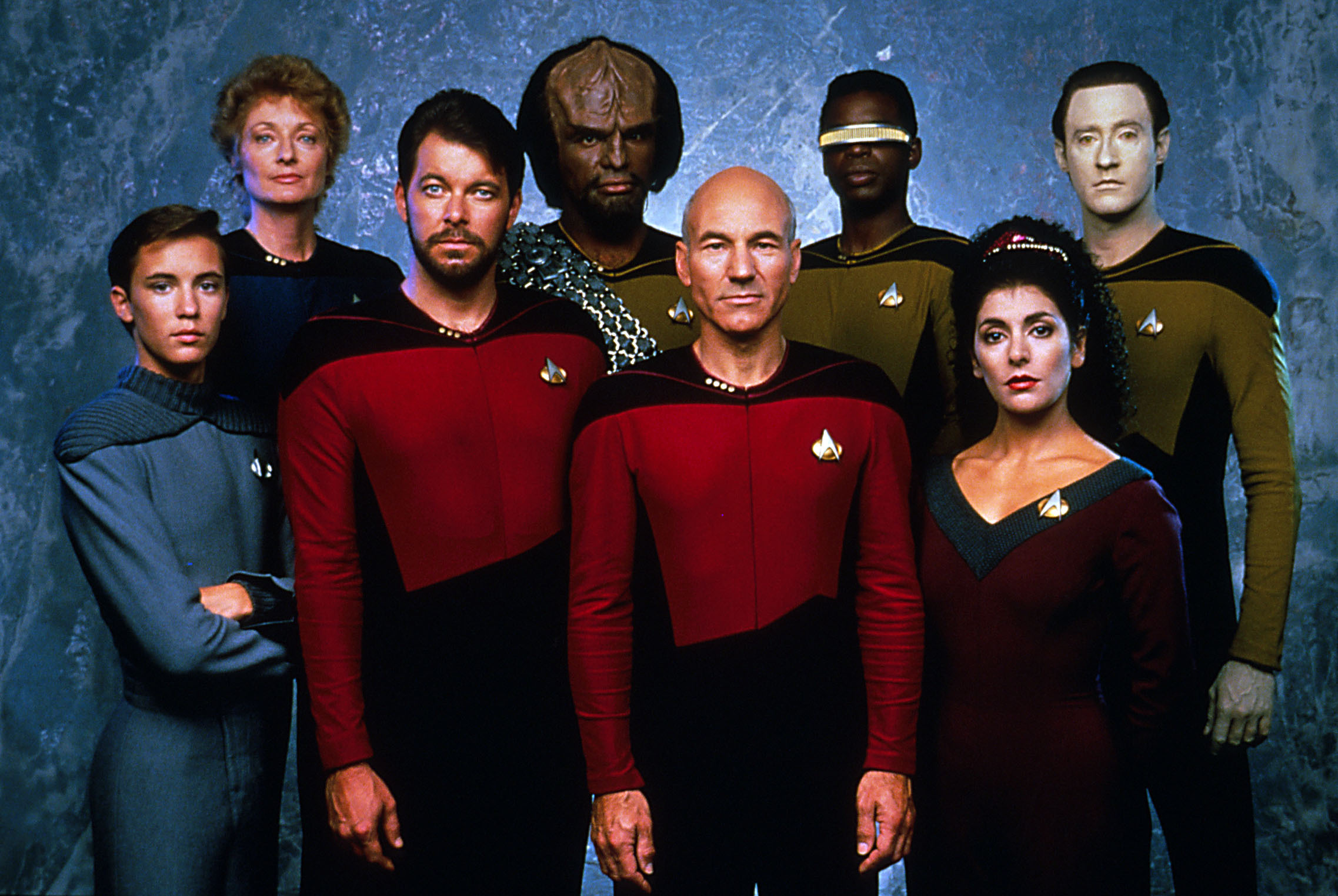
I watched Avater in 3D and it was an OK experience with slight issue with my glasses and I watched another 3D movie which was so inferior that I slept half-way and can't even remember its' name while writing this post.

Skeptism crawled in when I was in the final page of online booking making the credit card payment, well, what the heck, I'm gonna give this entertainment shit one last chance and it turned out to be a great movie experience.
Phew!

Nonetheless, one serious ramification shall be I don't think I would be able to watch any more good movies at cinema without something like IMAX and all "junk" movies goes to home theatre.
Ouch!
Saturday, October 13, 2012
1Z0-536 The Oracle Exadata 11g Essentials

Mr. Larry Elison said in one of his recent appearance when launching Exadata X3-2, "SAP Hana is kinda small... about 0.5TB small. It is indeed small. Mine is bigger." and something like that, although I can't remember his exact words.
Too bad, Mr. Bill Gates' Microsoft ain't jump on the bandwagon yet on a totally Microsoft based appliance. Microsoft is working with alliance partners like HP or so in current appliance wave.
So what's the big deal about appliance based solution?
Yeah? What's the big deal?
Appliance is not something new. Seriously.
Early days of computing solution actually were appliance-based! Computer engineers assembled a dedicated computing machine using their own proprietary hardware, software, networking devices, storage and components with performance centric mentality to maximize utilization of available resources. Use some marketing catch words from principals like IBM and Oracle: Balanced Configuration.
Then computing components became commoditized, leveraging economic of scale, drastically lower down prices, improve adoption and innovations. Too bad, the commoditization happened individually for each component. Solutioning process nowadays spends a hell of time and efforts to assemble these "unbalanced" components together and it requires a hell of group of specialized people like systems engineer, storage expert, network specialist and so on together to make sure the end result can somehow meet the real customer needs.
Change is inevitable. Complexity sucks.
Appliance based deployment lowers complexity.
Wait! Oracle actually try to differentiate appliance and appliance-like platform. Exadata is actually a appliance-like platform. What it really means is that Exadata provides almost full flexibility in operating the Oracle database software as if it is in a non-Exadata environment. A true appliance is more limited in terms of configuration. Emm, the characteristics of these two kinds are usually overlapping and we shouldn't waste too much time to try to identify the idiosyncrasy of both since they shall eventually converge into single definition.
So, there are Netezza, Exadata, SAP HANA, Greenplum, HP Vertica, SmartAnalytics and the list goes longer with many smaller players in the market. Gartner Magic Quadrant paper should be able to point out few names in this area.
Anyway, enough of the gibberish speech about appliance.
I think appliance is great as it will cut down my time in assembling a BOM for proposals, although sometimes the price tag is hard to fit into the budget unless Oracle or any appliance vendor is kindly to give out GREAT bid price for us.
I took and passed 1Z0-536 The Oracle Exadata 11g Essentials. Scored 84% . To me, 84% is a score that has plenty of rooms for improvements. I would attribute this below-than-my-average score to the lack of literature about Exadata in the circulation. This is an area for enhancement. Oracle, please take note.
My preparation materials basically include OPN learning materials about Exadata under the specialization track, "Achieving Extreme Performance with Oracle Exadata (Oracle Press)" and many whitepapers/articles.
Some major subject areas tested in the examination are IORM, Database Machine specs and best practices. I got ambushed by some questions about ASM related attribute and state of the disks. OUCH! No idea at all what the hell they are and I can only count on my common sense. Non-Exadata Oracle specific knowledge would be a great use here.
Thursday, August 23, 2012
MCTS 70-178 Microsoft Project 2010, Managing Projects


Suddenly I became nostalgic.
You know, Microsoft Project is one of some early batch of software that I used during tertiary education time besides the obvious DOS, Windows operating system, VB (Not .NET you young people!) and et cetera.
I remembered times when being instructed to present my project schedules which ended up with printing of few ten pages of "partial" gantt charts and stitched them together using double sided tapes or glues. Guess not easy to be a project manager during those times. :D
Anyway, transition from the yawning old version of Microsoft Project to the state of the art version of 2010 (2013 on its way) is phenomenal. Number of users grow into millions and with some quarter of them with a chartered PMP qualification. Still, more projects failed in this decade than the total of few previous decades added up. Microsoft Project is just a tool, and it really can't help if you don't understand the essential of managing a project.
Anyway, back to the story of 70-178.
You see, to me, this examination is nothing but just a milestome to tell people that I'm more proficient in using this tool than others. Technically, it's not a tough one either. I have passed various other exams, which I personally think at a different playing field than this exam.
So, don't worry too much if you are taking this exam anytime soon.
What you really need to prepare are:
- Download the trial version/buy the licensed copy of Microsoft Project 2010
- Use the software alot, and explore various of its features
- Understand the basics of project management (If you are a PMP, congrats that you are on a faster track to pass this)
- Read one or more books on Microsoft Project 2010. I scanned through most of them and I think "Microsoft Project" title from Sybex is short and concise (about 400 pages) whereby "Microsoft Project In Depth" from QuantumPM is indeed, in depth (about 1000 pages).
Can't get the damned "Gangnam style" out from my head. Geez.
Thursday, August 02, 2012
Atychiphobia
Suddenly I had this urge to write an entry after months of unintentional abandonment of this blog. "Unintentional" emphasized. C'mon, where got time taking care a pitiful blog which is not generating enough "ka-ching" to sustain my hunger for curiosity. Buy books, travels, being nerd, all need monies, agree?
Anyway, my part philosophical part empirical method of promoting the science of Failure generated few interesting insights.
Obviously, the idea of failure is wrongly understood by common mass. How say? People tend to shun potential failure unreasonably and without solid ground. Smart readers will notice I use the phrase "potential failure" instead of "absolute failure", this is because failure with likelihood of not failing could in turn mean likelihood for success. As usual, we want to avoid failure that could cause lives, significant financial impacts, bad ROI and all sort of outcomes where the actual/perceived cost outweigh actual/perceived benefit. If you're in the game, "High Risk High Return" should ring some bells, LOL.
It's all about risk management, like I always chanting to my co-workers.
Portfolio and Project Management -> Risk Management
Software R&D -> Risk Management
Financial Derivatives and Investment -> Risk Management
Career Planning -> Risk Management
Buy Life/Health/etc Insurance -> Risk Management
And the list grows longer and longer until you would have a reflex action closing the browser currently viewing this site.
The latest "sales" pitch of mine -> "Fail Fast, Fail Cheap, Fail Safe" managed to grab attention of the listeners whenever I used them in customer training sessions, motivational talks, project management meeting, coaching team members and even in interviews
:D Not bad as a way to get people to put their eyes and ears to you.
But I can't say the copyright of the phrase belongs to me as it relates to the works of many scientists, leaders, philosophers, mathematicians and all these successful people who contributely significantly to the society and nation. In the extreme case, they heroically "Fail Slow, Fail Pricey, Fail Deadly" to prove some hypothesises and perhaps to the betterment of mankind. Well, these cases were the end of the long tail if you know what I mean.
Anyway, to common man like us, probably more important is how the skill of failure affects our ability to reach optimal (even a local optima) state of our goals. If life is a constant deviation of any plan, then any plan should plan for deviation and if by definition any deviation is a failure, life is full with failures. It sucks right? Not really. Solution to any problem is the continous improvement of the sub-optimal/failed solution to the problem, monotonically. Well, biting my own tongue, to be precise, not always monotically, especially if you stucked in local optima and need to break out to find the global one.
With all due respects, always have the bigger and larger picture in your mind when failure is imminent or even planned. You will realize that you are moving one step further to success, just by failing.
Remember "Fail Fast, Fail Cheap, Fail Safe" Fail Fast -> Continous and Often Improvement
Fail Cheap -> Well, preserve the budget and $$$ for more trials
Fail Safe -> Don't screw up anything significant like your career, corporate reputation, life and so on.

Saturday, March 24, 2012
Oil spikes above $108 US
Oil prices briefly spiked to near $108 US per barrel Friday after a report that exports from Iran had tumbled this month.
Light sweet crude for May delivery closed higher by $1.52, at $106.87, after earlier jumping by as much as $2.90 to $108.25.
Iran, the world's third-largest oil exporter, has been locked in a high-stakes standoff with the West over its nuclear program.
The U.S. and Europe, who fear that it is building a weapon, are using financial sanctions to pressure Iran to open its facilities to inspection.
The report said Iran's shipments have tumbled by 300,000 barrels per day, or 14 per cent, in March. That would be a strong sign that the sanctions are starting to impact the country's oil industry.
The gain helped the commodities-weighted Toronto Stock Exchange. The S&P/TSX composite index closed up 103.85 points at 12,465.66
Loonie rebounds
The rise in oil — Canada's biggest commodity export — also caused the Canadian dollar to take a u-turn. After falling below parity for the first time since March 6 and losing as much as 0.83 of a cent, the loonie rebounded to close up a tenth of a cent at 100.13 cents US.
The Canadian dollar initially lost ground on signs of growing strength in the U.S. economy, which would be positive for the greenback, and concerns about slipping demand for commodities as China's economy slows, have helped push the loonie down.
The fall came despite data from Statistics Canada that found gasoline and food continued to push up inflation in February to 2.6 per cent, the second consecutive monthly increase.
Sustained higher inflation would suggest the Bank of Canada would raise intererest rates, exerting upward pressure on the loonie.
Core inflation — the underlying pressure on consumer goods, excluding volatile items such as energy and fresh foods — rose two notches to 2.3 per cent, above the Bank of Canada's two-per-cent target line.
But Emanuella Enenajor of CIBC World Markets said it's not clear yet whether Canada has entered a period of sustained higher prices
Although February's data represented the fastest pace of price increases since 2008, said Enenajor, "the rise in the ex-volatile rate could prove temporary, so the Bank of Canada will likely look through today's elevated reading — suggesting limited policy implications."
How Africa’s largest island was colonised by Asians

MADAGASCAR is renowned for its unusual animals, particularly its lemurs, a group of primates extinct elsewhere on the planet. Its human population, though, is equally unusual. The island was one of the last places on Earth to be settled, receiving its earliest migrants in the middle of the first millennium AD. Moreover, despite Madagascar’s proximity to Africa (400km, or 250 miles, at the closest point) those settlers have long been suspected of having arrived from the Malay Archipelago—modern Indonesia—more than 6,000km away.
There are three reasons for this suspicion. First, it has been recognised for centuries that the Malagasy language, though distinct, borrows a lot of words from Javanese, Malay and the tongues of Borneo and Sulawesi. Second, the islanders’ culture includes artefacts ranging from boats with outriggers to xylophones, and crops such as bananas and rice, that are (or, rather, were then) characteristically Asian, not African. And third, genetic evidence has linked the modern Malagasy with people living in eastern Indonesia as well as farther off in Melanesia and Oceania.
Now, Murray Cox of Massey University in New Zealand and his colleagues have put the matter beyond doubt by showing not only where the first settlers came from, but also how many of them there were. And the answer is surprisingly few. Though Dr Cox is unable, with the method he used, to work out how many men were in the original party, the number of women was 30.
He drew this conclusion, just published in the Proceedings of the Royal Society, by sampling the DNA of 266 Malagasy people and comparing it with existing samples from 2,745 Indonesians. He concentrated on DNA from mitochondria. These are cellular components involved in energy production that are descended from bacteria which became symbiotic with humanity’s ancestors almost 2 billion years ago, and thus have their own genes. People inherit mitochondria only from their mothers, which is why only the female line of descent can be tracked using them.
The advantage of studying mitochondrial DNA is that it is not shuffled around by sex. Dr Cox and his colleagues were therefore able to make a statistical comparison of Indonesian and Malagasy mitochondrial genomes knowing that any changes which had occurred since they separated would be the result of rare mutations. These can be spotted and accounted for. Indeed, because they can be tracked they add to the information which can be extracted from a sample.
Having confirmed that Malagasy and Indonesian DNA separated about 1,200 years ago, which is statistically close to the date archaeologists suggest Madagascar was colonised, the team then asked their data how many women, drawn at random from the Malay Archipelago of that period, would have been needed to explain the variation in mitochondrial DNA in Madagascar. The answer was about 30.
That answer bears on a second question: was the colonisation of Madagascar a deliberate act or an accident? The first is possible. At the time, much of the Malay Archipelago was in the hands of the Srivijayan empire, an entity that could certainly have sent expeditions across the Indian Ocean, had it so willed. But there is no historical evidence that it did. In any case if it had, it is likely that a successful colonisation by one group would have been followed by others, as happened when Europeans discovered the Americas.
Most likely, then, the first Malagasy were accidental castaways, news of whose adventure never made it back home. But there is still a puzzle. Most ships’ crews are male. Though the number of men in the original party will remain obscure until an analysis like Dr Cox’s is done on the Y-chromosome of Malagasy men (Y-chromosomes include DNA passed exclusively down the male line in the way that mitochondrial DNA is passed down the female line), the presence of women on board a trading vessel would have been unusual. Unless, of course, the women themselves were the objects being traded. Possibly, then, Madagascar was colonised by an errant slave ship. Which would make its history even stranger than anyone had previously thought.
Angry Birds launches into space

IT’S HERE: Angry Birds Space features 60 levels, with more coming in the near future via free and paid in-app updates.
Angry Birds Space, one of the most hotly anticipated mobile phone apps of the year has blasted into this galaxy and is now available for iOS, Android, Mac and PC users.
“This is Rovio at its finest, and we are more than excited to bring Angry Birds Space to all our fans worldwide,” said Mikael Hed, chief executive officer of Rovio in a statement.
“This launch marks a huge step for us as a company, and our whole team and partners have really pulled together to bring out a fantastic array of exciting products and experiences. We hope that our fans will find all things Angry Birds Space as delightful as the Rovio family does.”
Angry Birds Space features 60 levels, with more coming in the near future via free and paid in-app updates.
The iOS and Android app is priced at 99 cents (RM3), the HD version for Tablets is US$ 2.99 (RM9) and the Mac version is US$ 4.99 (RM15). All are available now.
In other big app news, OMGPOP the maker of virally popular social drawing app Draw Something, has been acquired by social gaming platform Zynga for a reported US$ 210mil (RM630).
In November Rovio announced that its Angry Birds games had been downloaded a total of 500 million times across various platforms with users collectively spending 300 million minutes playing the game daily. – Relaxnews 2012
Subscribe to:
Posts (Atom)